October 15, 2025
From Daily Life to Disaster Response: The Rise of Phase Free Products

This approach is no longer confined to corporate product development. Local governments are also incorporating the phase-free concept into the design of public facilities, creating environments that function normally in peacetime yet remain ready to support communities in times of crisis.
Measuring with a Paper Cup, A Small Innovation with Big Impact
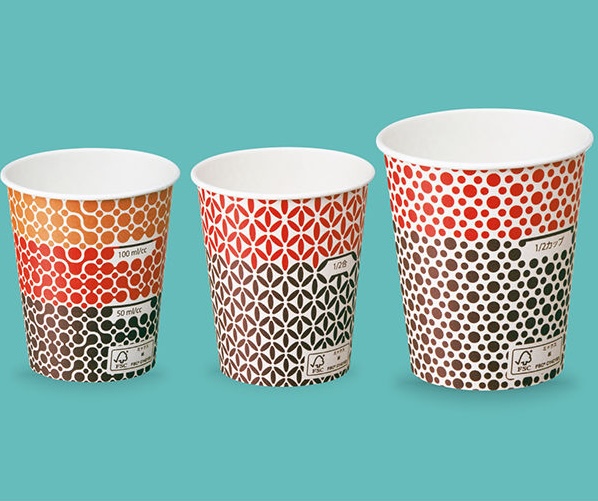 Photo from Askul website
Office supplies company Askul began selling these multifunctional paper cups in 2019. They are intended not only for everyday use when serving visitors, but also for preparing meals at evacuation centers or mixing baby formula in emergencies. Importantly, the price is almost the same as that of regular paper cups, making the transition to phase-free products easy and cost-effective.
Askul’s decision was driven by feedback from businesses that lacked both storage space and budget for dedicated emergency stockpiles. Since then, the company has expanded its phase-free lineup to include products from other manufacturers, such as crush-resistant cardboard boxes that can be assembled into emergency beds, and slippers made of puncture-proof materials that protect wearers from broken glass.
Kimio Meguro, Professor of Urban Earthquake Disaster Mitigation Engineering at the University of Tokyo, notes that traditional forms of public assistance are becoming increasingly difficult to sustain amid population decline and other structural challenges.
“We must shift our disaster preparedness mindset from cost to value,” he says. “By adopting phase-free solutions that blur the line between everyday life and emergencies, and by creating an environment in which private companies can actively participate, we can build a more resilient society.”