November 27, 2025
Turning Empty Houses into Opportunity, Japan’s Local Governments Race to Revive Abandoned Homes
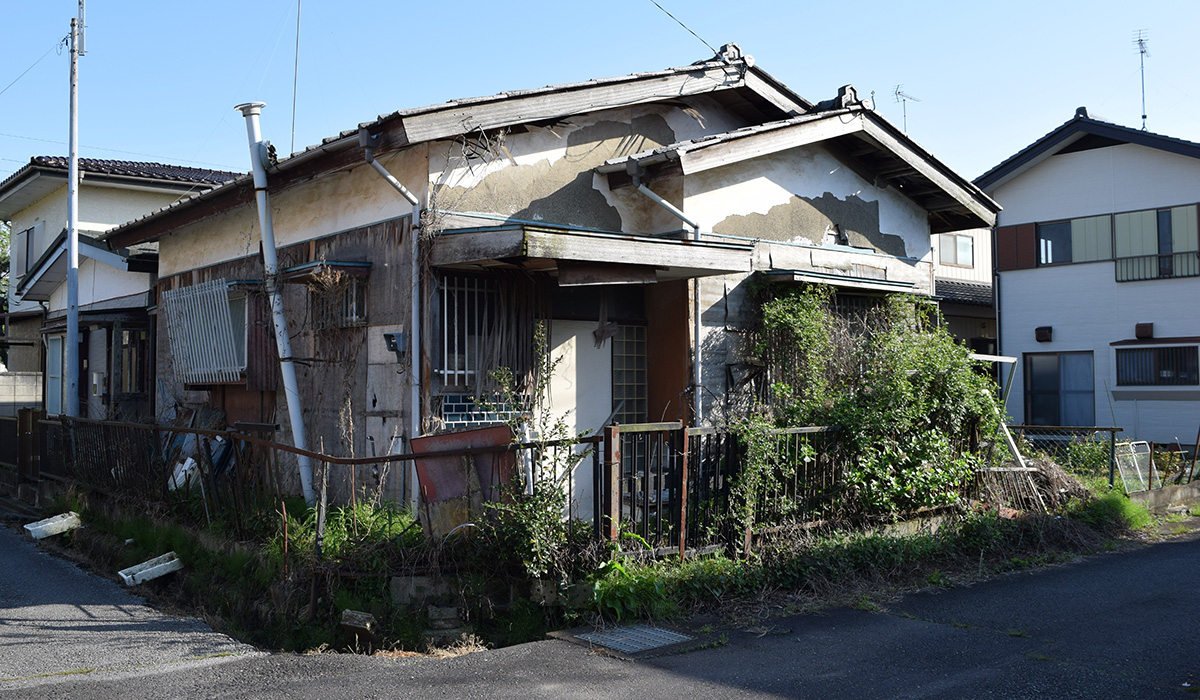
Vacant properties are increasing nationwide, but new laws, digital matching tools, and disaster resilience concerns are driving innovative reuse programs.
Local governments across Japan are accelerating efforts to tackle the growing problem of vacant houses. As the population ages and shrinks, the number of abandoned homes that are not used for rental or other purposes reached a record high in 2023. Poorly managed vacant houses pose serious risks, including fires and a deterioration in neighborhood safety. Hiroshima Prefecture, which has reduced its vacant house rate over the past five years, is working with municipalities across the prefecture to attract new residents through online matching platforms that use virtual reality technology.
According to the 2023 Housing and Land Statistics Survey by the Ministry of Internal Affairs and Communications, the total number of vacant houses nationwide has nearly doubled over the past 30 years to about 9 million. Of these, 3.85 million are abandoned properties that have been unoccupied for long periods and are not available for rent, representing an increase of roughly 10 percent from the previous survey in 2018. The overall vacant house rate rose 0.3 percentage points to 5.9 percent. By prefecture, Kumamoto recorded an improvement of 0.3 points, while Fukuoka and Hiroshima each saw a decline of 0.2 points.
Vacant houses can also obstruct disaster recovery. After the 2016 Kumamoto earthquake, some dangerous structures could not be removed because their owners were unknown. In response, Kumamoto Prefecture has introduced subsidies to convert empty homes into accommodation facilities, community exchange spaces, or housing for migrants, and has already received applications from six towns and villages.
The central government is also stepping up its response. Amendments to the Act on Special Measures Concerning Vacant Houses, which came into force in 2023, expanded the scope of administrative guidance to include not only properties at risk of collapse but also poorly maintained houses with partially damaged walls or windows. From April 2024, registration of inherited real estate has become mandatory, a move aimed at preventing the problem of unknown ownership.
Professor Hiroko Saito of Yokohama City University, an expert on vacant house policy, warns that demolishing homes after they have severely deteriorated places a heavy burden on both municipalities and owners. She stresses the importance of ensuring that owners, including heirs, recognize their responsibility as property managers, while at the same time building cooperative frameworks in which local governments and related organizations work together to find practical ways to put vacant houses back to use.